Air-purifying Houseplants to help with Epilepsy Management
-
![Infographic of 4 houseplants that clean the air in your home.]()
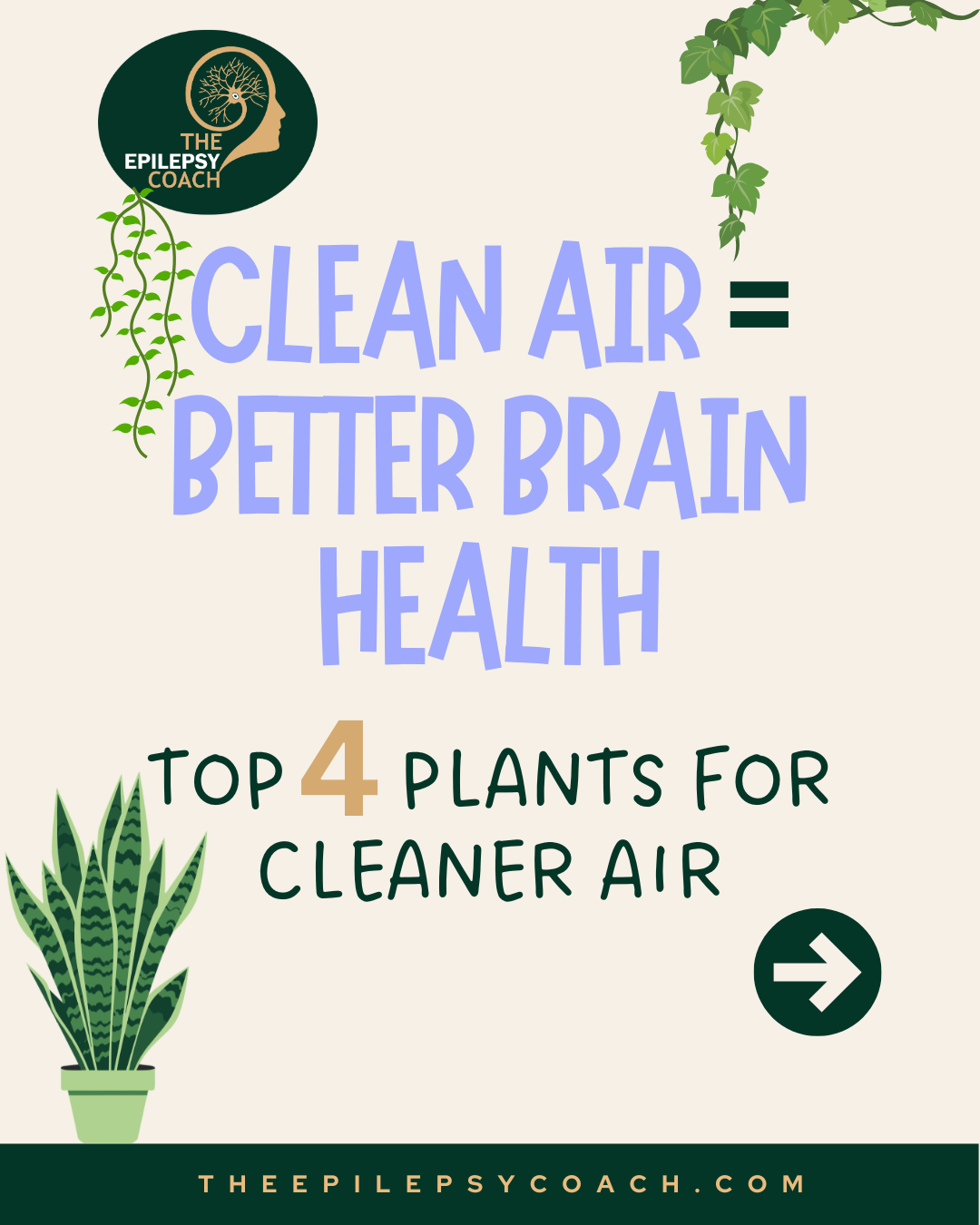
Research shows that air pollution negatively impacts brain health, and for people with Epilepsy, clean air may help support seizure control. While you can’t control every environment, improving indoor air quality is possible. Discover how air-purifying houseplants can help create a healthier home and support overall neurological well-being.
-
![Studies around poor air quality and the increased risk of seizures.]()
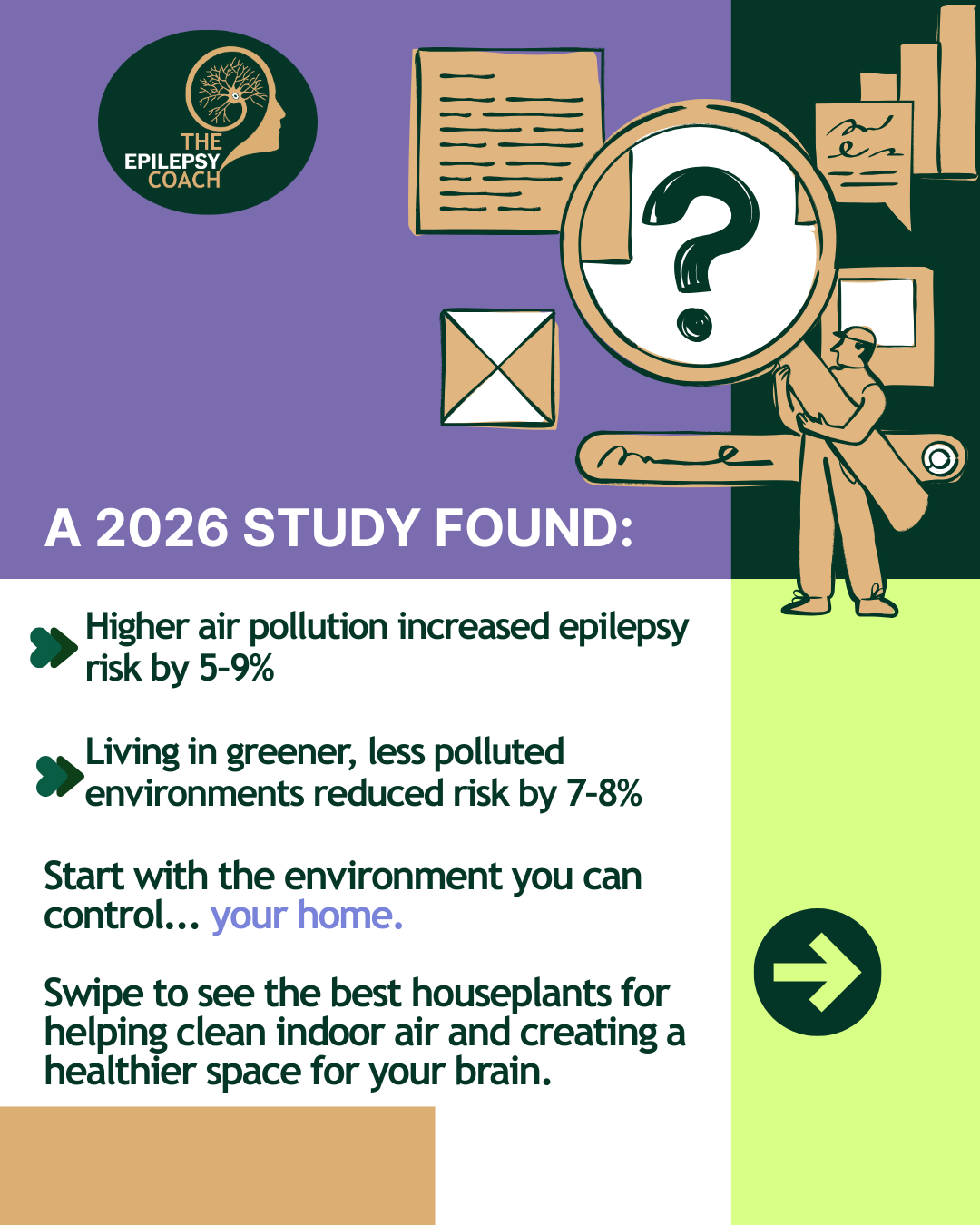
I recently read a study highlighting how air quality can affect seizure frequency and severity. While a 5% increase may seem small, Epilepsy is influenced by multiple factors, and even minor changes can have a cumulative impact. Improving indoor air quality is one way to help reduce risk. Low-cost, easy-care houseplants offer a simple way to create a healthier home environment.
-
![Peace Lily Flower cleaning air for epilepsy management]()
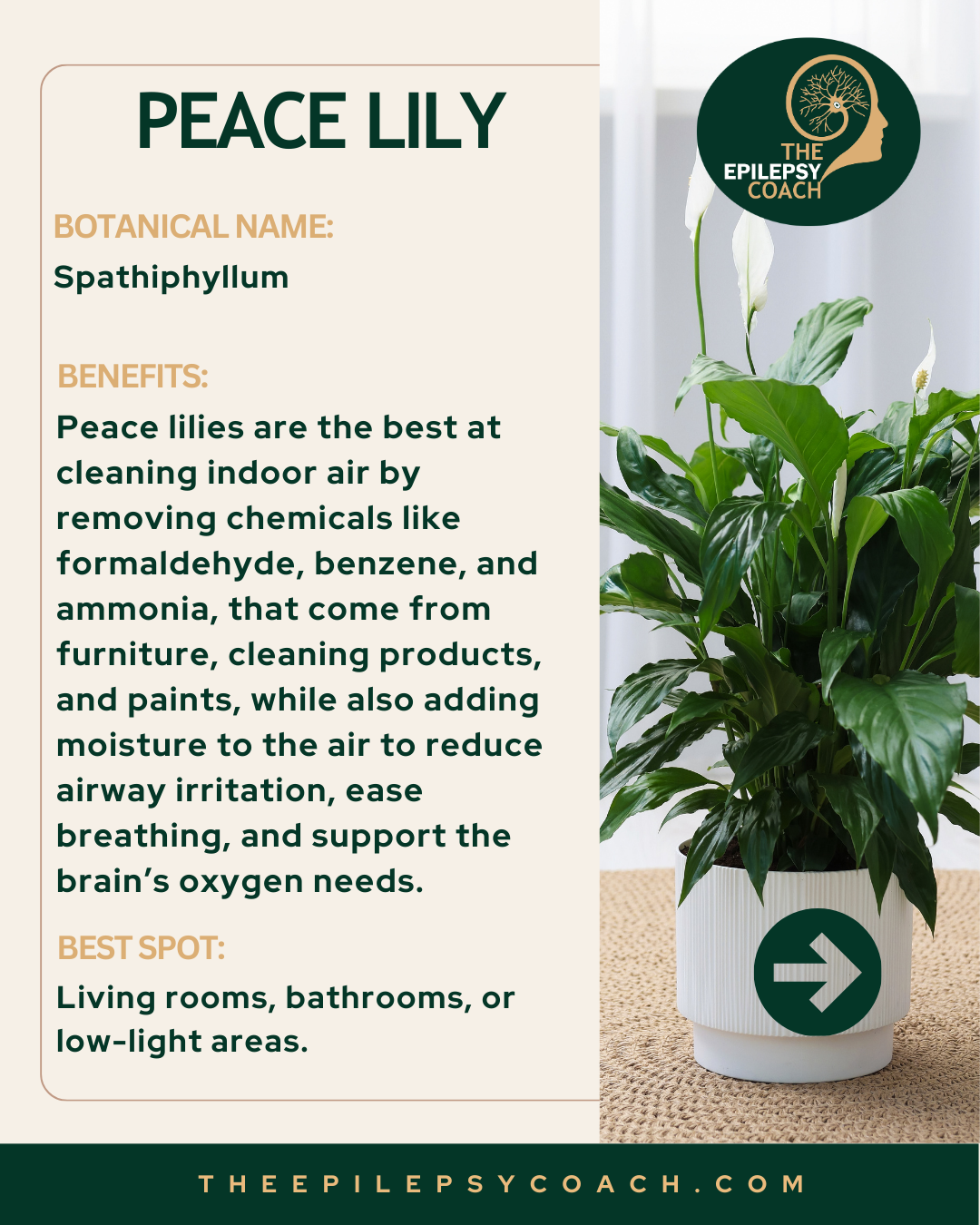
Peace Lily is one of the most effective houseplants for improving indoor air quality, helping to reduce common pollutants such as formaldehyde and ammonia, both known to be neurotoxic at certain levels. However, it can be relatively demanding to care for, so proper research and maintenance are important to keep it healthy and effective.
-
![Snake Plant cleaning air for epilepsy management]()
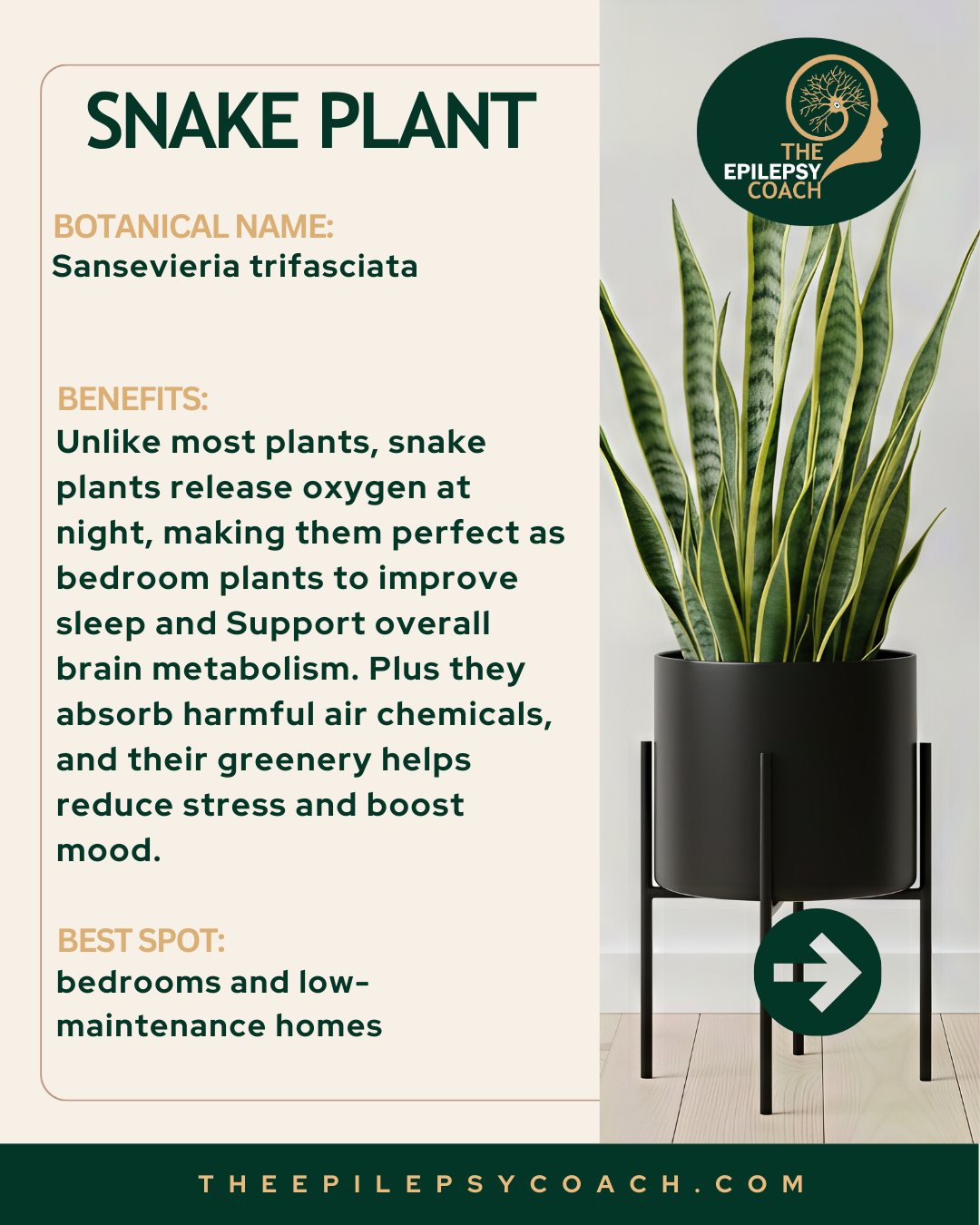
Snake Plant is unique in that it releases oxygen at night, making it well suited for bedrooms and supporting a fresher sleeping environment. It is also low-maintenance and resilient, making it an easy and attractive addition to a windowsill.
-
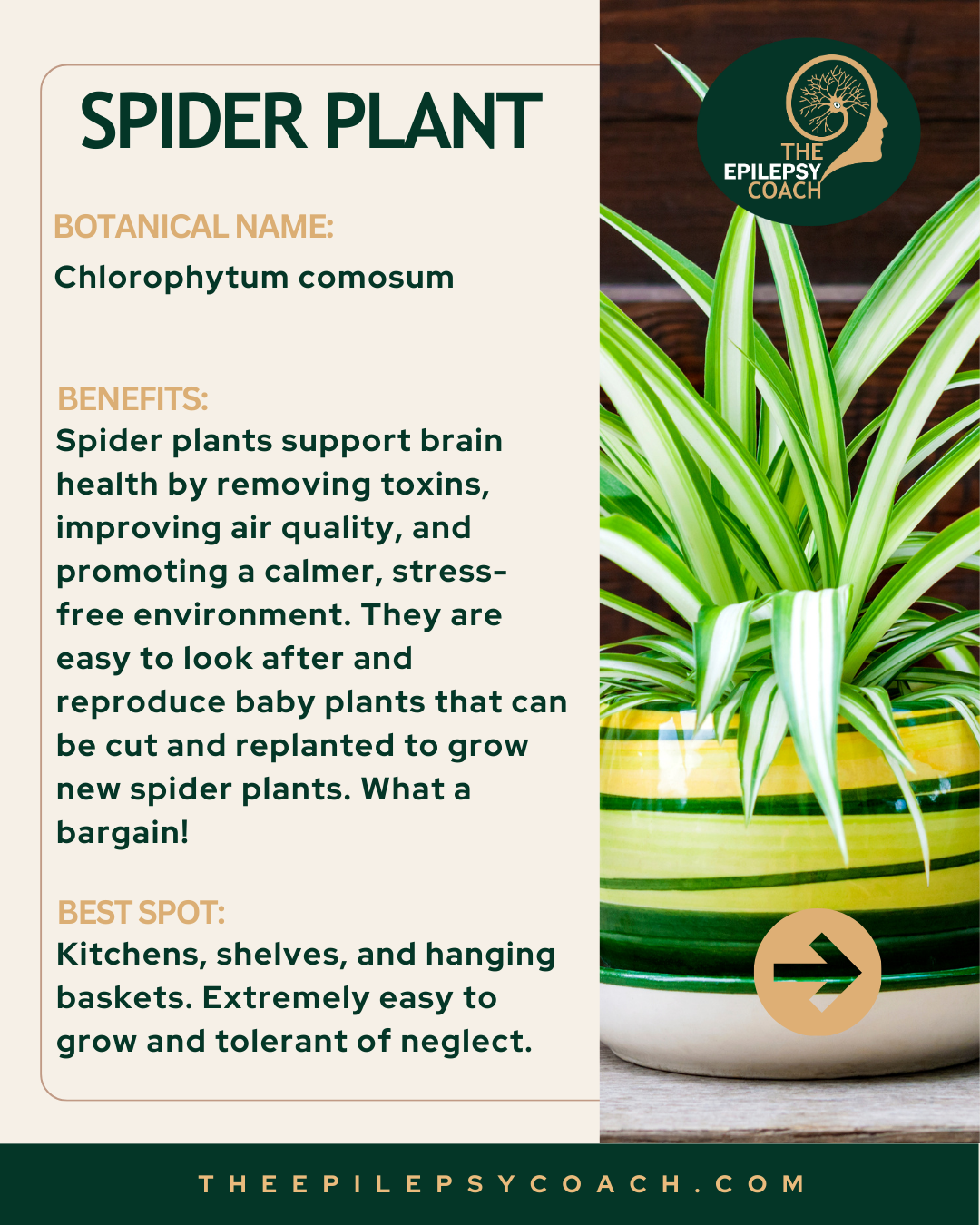
![Spider Plant cleaning air for epilepsy management]()
Spider Plant is a popular choice for improving indoor air quality, helping to reduce common airborne toxins while adding vibrant greenery to your space. It is easy to care for and propagates quickly through offshoots, allowing you to grow multiple plants from a single original, making it both practical and cost-effective for the home. I have six in my home from one plant I bought years ago.
-
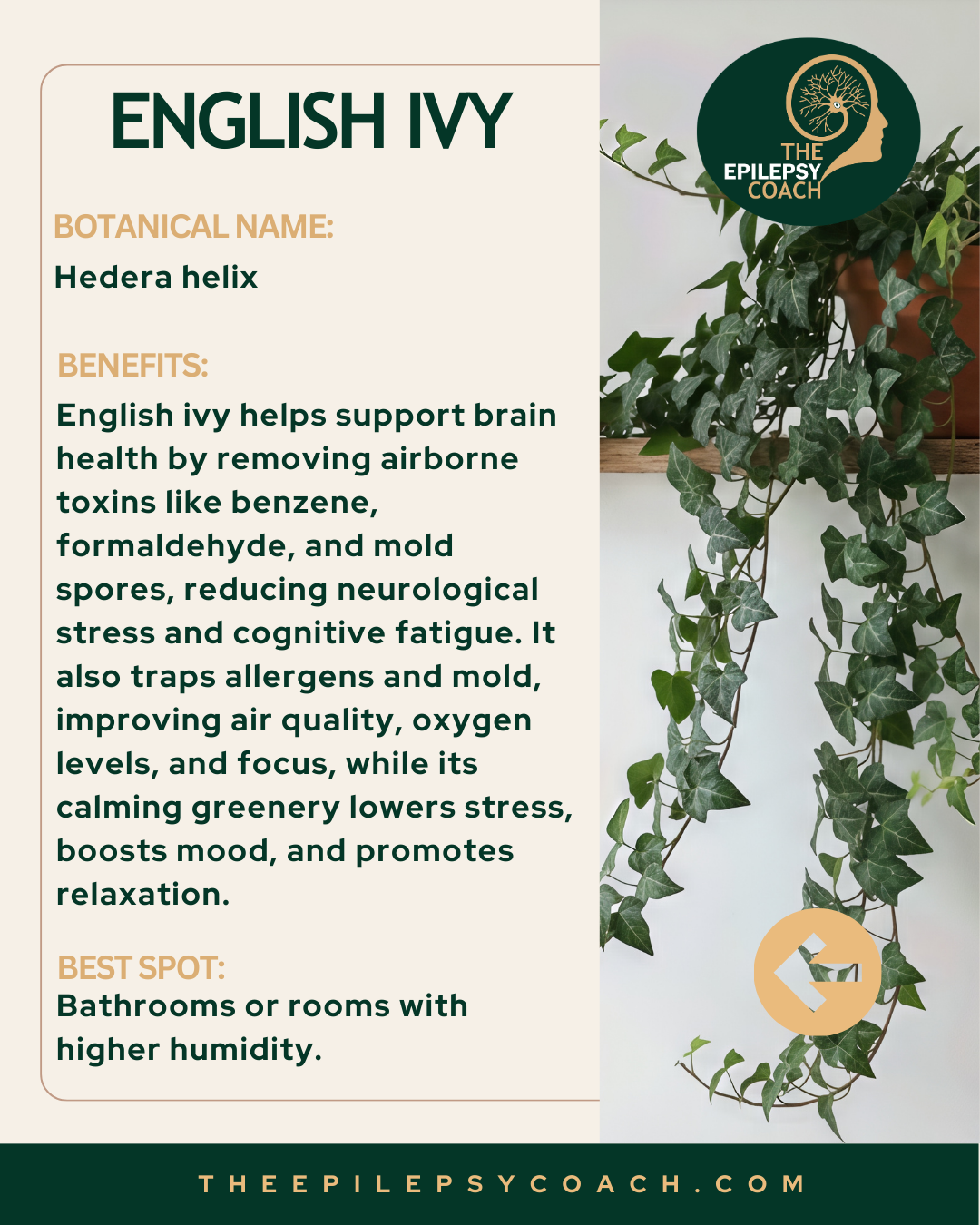
![English Ivy Plant cleaning air for epilepsy management]()
English Ivy is an attractive hanging plant that improves indoor air quality, supporting brain health by reducing airborne chemicals from toiletries and cleaners. It thrives in humid environments, making bathrooms an ideal spot to keep the air fresh and toxin-free.