Dopamine & Epilepsy ~
The missing piece in epilepsy management
-
![]()
Neurotransmitters play a critical role in epilepsy, with dopamine emerging as a key factor in seizure regulation and effective epilepsy management.
-
![]()
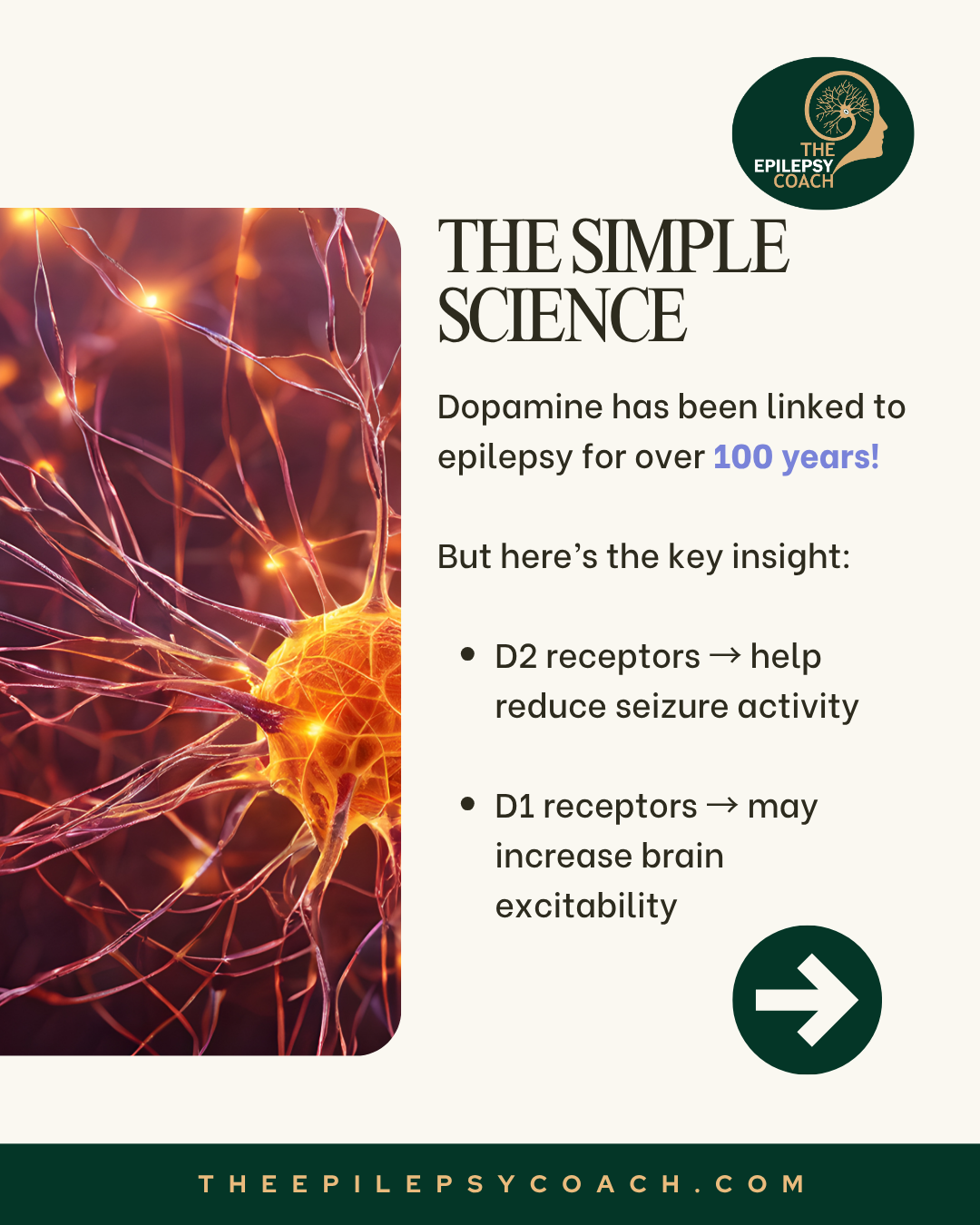
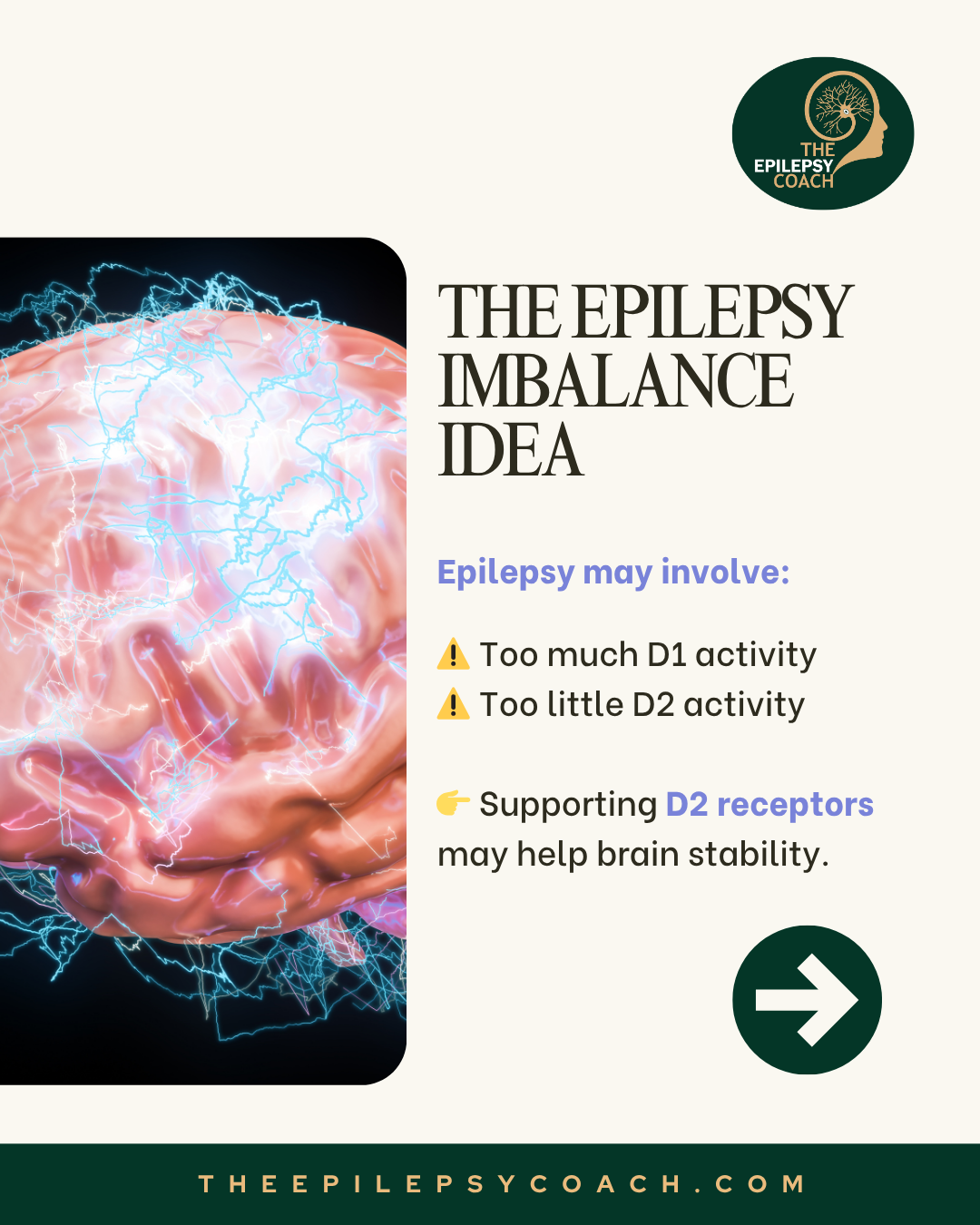
Research on epilepsy highlights the importance of dopamine receptor balance, particularly between D1 and D2 receptors. Evidence suggests that D2 receptor activity is associated with a calming effect on the brain and may help reduce seizure activity, while D1 receptor activity is linked to increased neuronal excitability. An imbalance favouring D1 may contribute to heightened seizure risk in some individuals.
-
![]()
This raises an important question: how can we support D2 receptor activity while reducing the influence of D1 receptors? Encouragingly, there are evidence-based strategies that may help restore this balance in dopamine receptors in the brain.
-
![]()
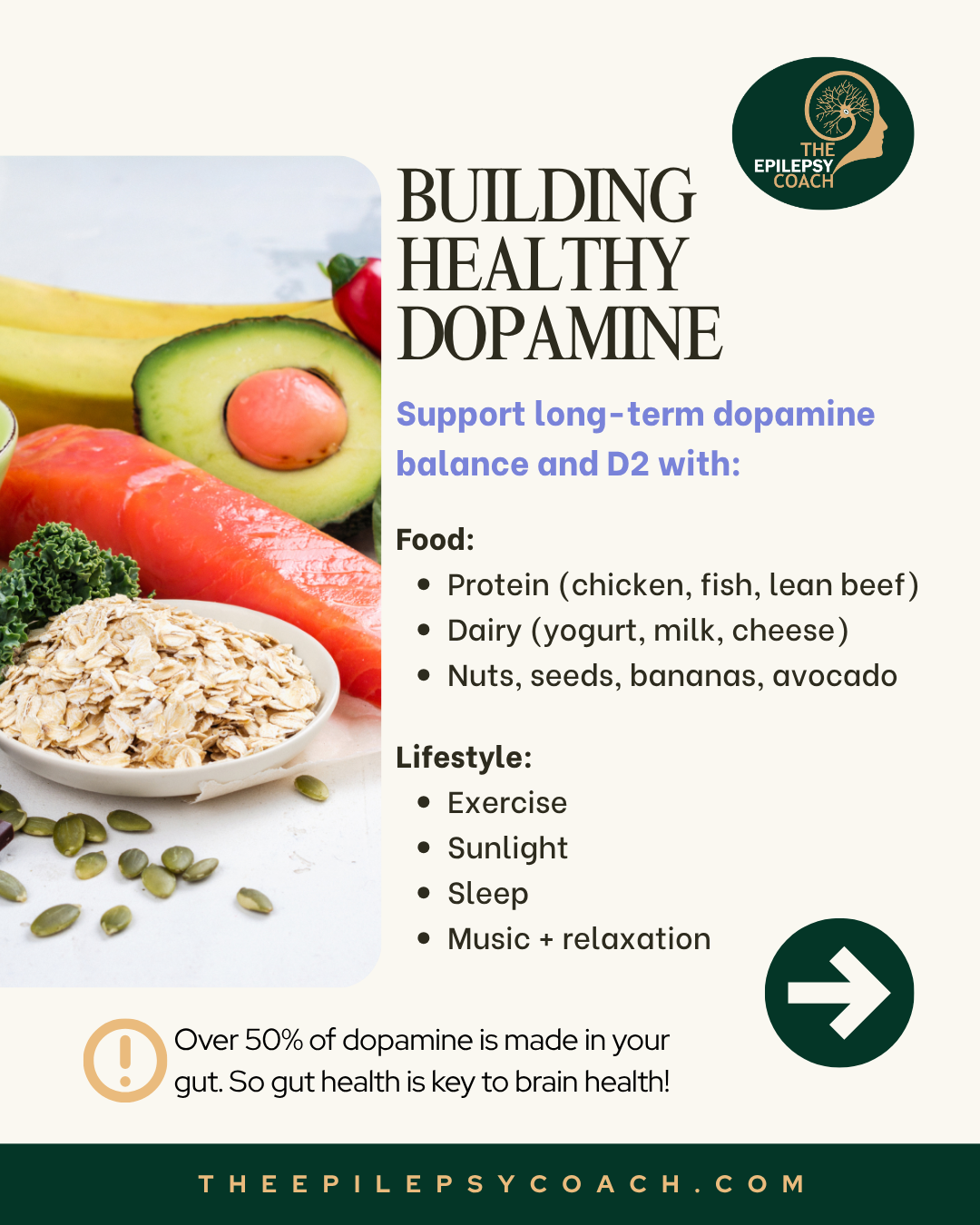
Diet, lifestyle, and mindset all influence dopamine activity, and not all dopamine responses are equal. Nutrient-dense foods such as quality proteins, Greek yogurt, cottage cheese, nuts, seeds, bananas, and avocados can support healthier dopamine balance. Key lifestyle habits, including regular exercise, sunlight exposure, quality sleep, relaxation, and social connection, also play an important role in supporting D2 receptors.
-
![]()
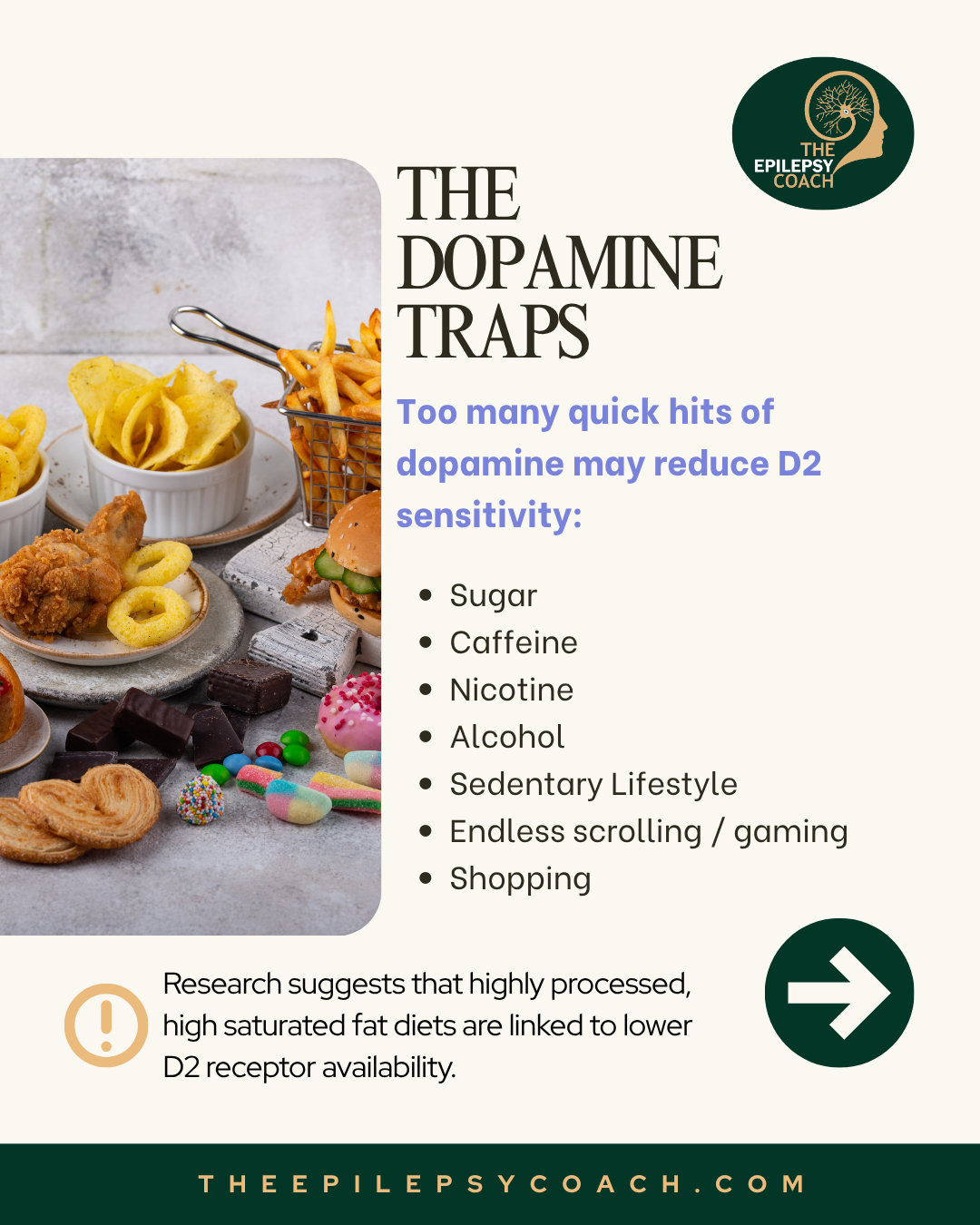
That pleasurable boost you feel from chocolate or buying a new pair of jeans is driven by dopamine. However, frequent ‘quick hits’ from sugary foods or impulse-driven activities tend to stimulate D1 receptor activity, which may increase brain excitability. Over time, this pattern can be less supportive of neurological stability. Prioritising more sustained, balanced sources of dopamine can better support long-term brain health.