Vitamin D & Epilepsy
-
![The importance of Vitamin D and Epilepsy.]()
Vitamin D is essential for overall health, playing a key role in brain function and epilepsy management. While the body naturally produces Vitamin D through sun exposure, this process depends on sufficient sunlight intensity, typically available during spring and summer. In colder months, when sunlight is limited, Vitamin D supplementation becomes important to maintain optimal levels and support neurological health.
-
![Why Vitamin D matters for people with Epilepsy.]()
Vitamin D supports far more than bone health. It plays a vital role in both nervous system function and immune health. Maintaining adequate Vitamin D levels is important, and can be easily monitored with a simple at-home finger-prick test.
-
![The risk of low Vitamin D and Epilepsy.]()
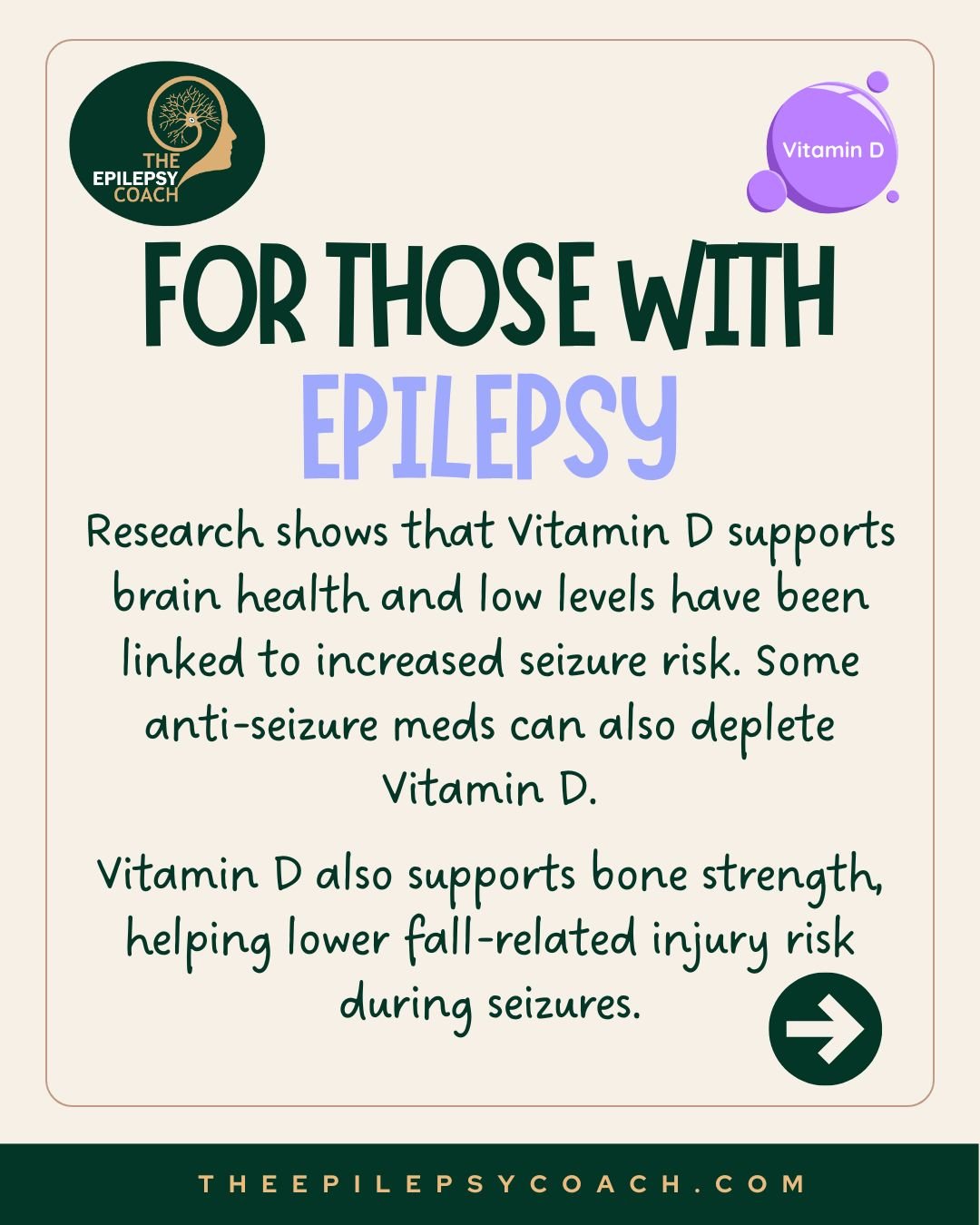
Numerous studies have explored the link between low Vitamin D levels and an increased risk of seizures. Research also suggests that some anti-seizure medications may reduce Vitamin D levels, potentially raising both seizure risk and the likelihood of bone fractures, particularly in the event of a tonic-clonic seizure and fall.
-
![Vitamin D supplementation in Winter for better seizure management.]()
The body can store up to three months’ worth of Vitamin D, helping maintain levels through autumn. However, levels often decline during winter due to reduced sunlight exposure. Supplementing with Vitamin D, ideally combined with Vitamin K2 to support absorption, can help maintain optimal levels until sunlight increases again in spring.